Multimodal Logistics Planning for Industrial Infrastructure
HeavyOS is designed to help project teams compare transport modes and route combinations through one structured decision workspace.
Siloed Route Planning Increases Cost and Route Failure Risks
Evaluating road, barge, rail, and ocean options independently often results in late structural blockage discoveries and unaligned carbon goals.
Isolated Mode Evaluation
Road, inland waterway, and rail routes are analyzed by separate specialists with incompatible planning metrics and assumptions.
Untracked Dimensional Limits
Height restrictions, bridge load limits, or quay crane capacities are identified late in project schedules during execution.
Disconnected Environmental Comparison
Emissions estimations are calculated post-transport rather than acting as a decision metric during early route planning.
Four-Step Multimodal Decision Workflow
From initial cargo profile definition to locked multimodal operational concept.
Define Cargo & Project Requirements
Input weight distributions, envelope dimensions, port capabilities, and site timeline constraints.
Generate Feasible Mode & Route Options
Build combined transport chains utilizing heavy haulage, inland barges, coaster vessels, and rail transport.
Compare Cost, Capacity, Time, Risk & Emissions
Evaluate trade-offs between transit speeds, total freight budgets, permit complexity, and CO2 intensity.
Select Planning Basis & Transfer to Execution
Lock in the optimal multimodal strategy and push parameters to procurement and operational teams.
Core Multimodal Planning Capabilities
Analytical tools for evaluating heavy transport corridors across all major freight modes.
Road, Rail, Inland Waterway & Sea Comparison
Side-by-side evaluation of all four major heavy transport modes in a single dashboard.
Capacity & Dimensional Suitability
Verify cargo envelope alignment with barge deck strengths, rail loading gauges, and road clearances.
Cost & Duration Scenarios
Simulate route options under varying weather windows, port congestion, and seasonal water level changes.
Operational & Regulatory Risk Analysis
Benchmark permit lead times, transshipment risks, and civil infrastructure constraints per corridor.
Environmental Impact Comparison
Estimate CO2 footprint and energy intensity across modal options early during feasibility phases.
Shared Decision Documentation
Archive route selection rationale and technical trade-offs for EPC audit and client reporting.
Strategic Alignment Across Project Partners
Connecting EPC engineers, freight forwarders, and terminal operators.
Corridor Reliability & Budget Feasibility
Identify the most reliable, cost-effective multimodal transport corridors early in engineering phases.
Optimized Concept Building
Build optimized routing concepts combining river barge, ocean vessel, and heavy trailer legs.
Capacity & Transshipment Alignment
Align transshipment schedules and heavy lift crane availability with incoming project cargo shipments.
Notice on Route Planning Boundaries and Validation Requirements
HeavyOS supports route scenario comparison and decision-making.
- HeavyOS does not guarantee legal route feasibility or issue civil transit approvals
- Final route suitability must always be verified by transport engineers, carriers, and local authorities
- Environmental impact outputs serve as planning indicators rather than certified GHG audit reports
Related HeavyOS Workflows
Explore connected modules across heavy transport, tendering, and permit management.
Project Logistics Software
Manage industrial project freight from tender preparation to final site delivery.
Heavy Transport Software
Specialized software tailored for heavy haul and special transport.
Transport Permit Management
Coordinate transport permits, authority consultations, responsibilities, conditions, and deadlines.
Initial Pilot Program
Apply to the HeavyOS Initial Pilot Program to evaluate selected workflows in a controlled environment.
Frequently Asked Questions
Key details regarding HeavyOS multimodal route planning capabilities.
Evaluate Your Multimodal Planning Workflow with HeavyOS
Apply to review selected route-scenario, transport-mode, capacity, cost, duration, risk, or environmental-indicator workflows within a controlled pilot scope.
Apply to the HeavyOS Initial Pilot Program.
HeavyOS is currently in development and preparing its initial pilot program. Applications are reviewed based on the organization, use case, and fit with the program. For selected organizations, the pilot scope, objectives, data boundaries, responsibilities, and evaluation criteria are defined in writing.
- STEP 01
Application review
We review your organization, use case, and potential fit with the HeavyOS initial pilot program.
- STEP 02
Workflow and fit assessment
The proposed workflow, pilot objectives, and fit with the current development scope are assessed. No live operational data is required for this initial review.
- STEP 03
Written pilot scope
For selected organizations, modules, participants, milestones, data boundaries, responsibilities, and evaluation criteria are defined in writing.
- STEP 04
Controlled prototype evaluation
Selected modules are reviewed in a controlled environment. User feedback, open points, and further development needs are documented.
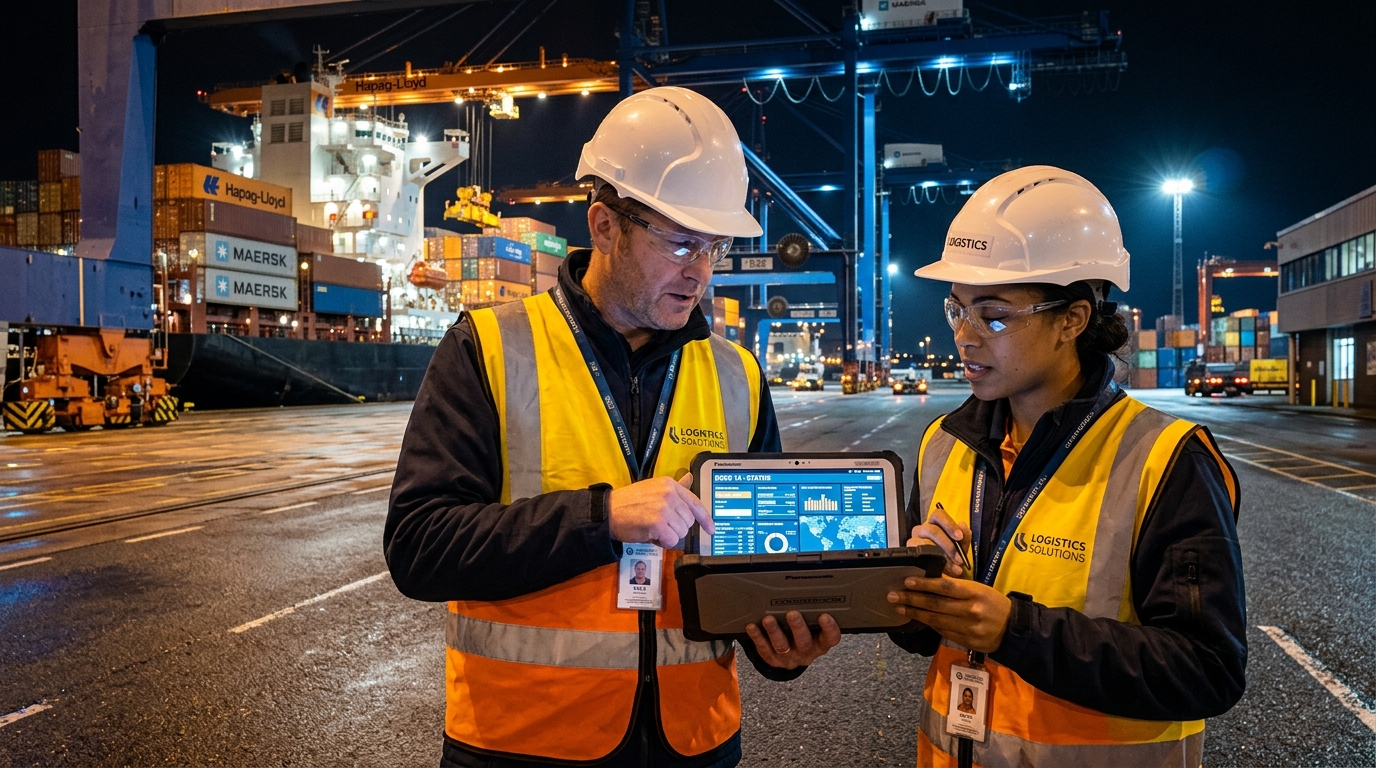
The pilot is limited to selected modules and evaluation objectives relevant to the agreed use case.
Users review prototype workflows and document gaps, operational needs, and development suggestions.
Scope, data types, access boundaries, responsibilities, evaluation criteria, and any costs are agreed separately in writing.
The initial assessment can be completed without sharing live operational data. Any later data use is agreed separately.
An application or pilot participation does not guarantee a commercial agreement, continued access, future pricing, special terms, references, or public communications.
Submitting an application does not guarantee participation. Pilot scope, schedule, data boundaries, responsibilities, and any commercial conditions are confirmed separately in writing.